


Tea Grades Explained: What They Mean and Why They Matter
Tea is one of the most loved beverages around the world, but many tea lovers do not know that every tea leaf has its own quality grade. Tea grades help identify the size, appearance, and style of processed tea leaves. Understanding tea grades can help you choose the right tea for better taste, aroma, and overall experience.
What Are Tea Grades?
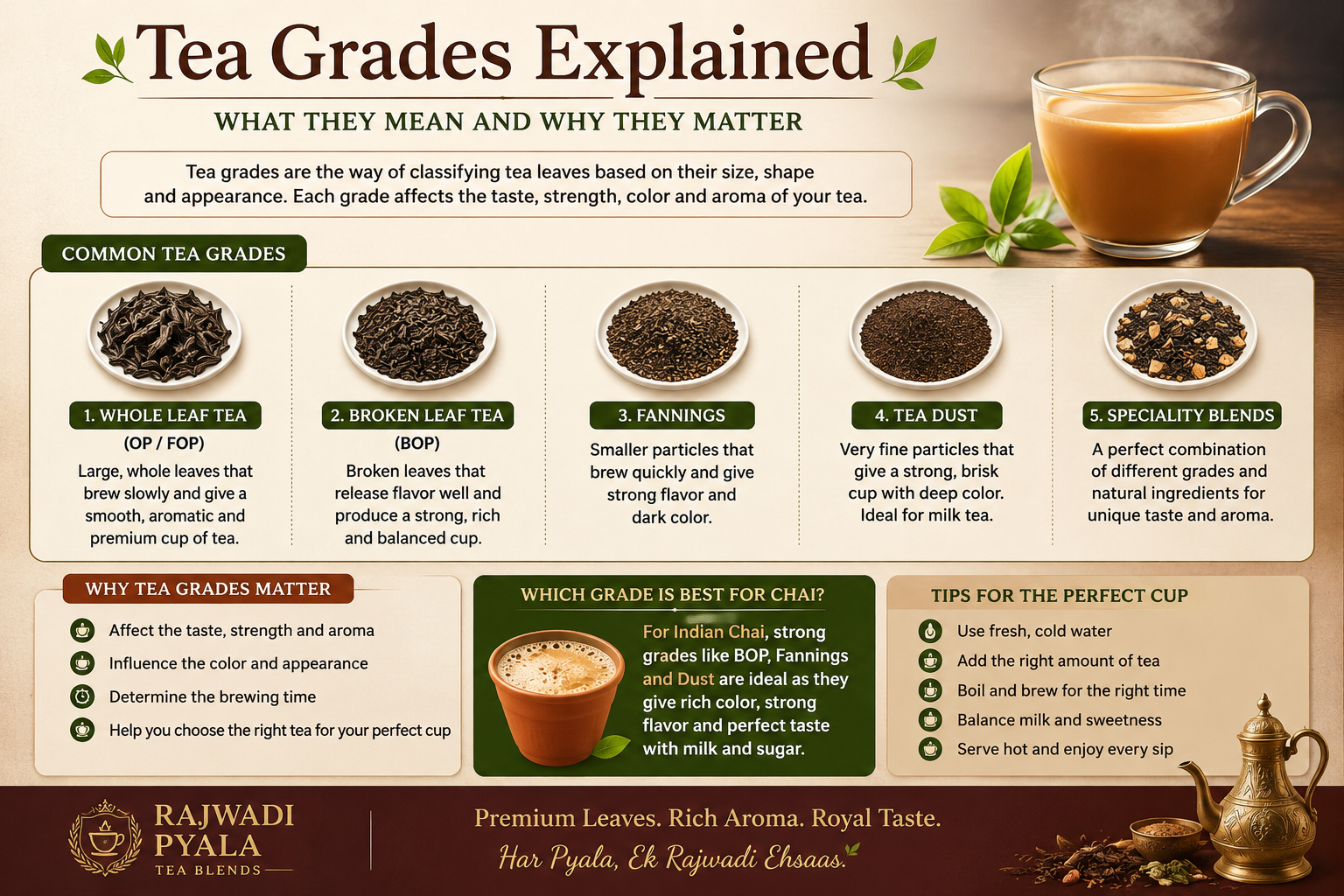
Tea grades are classifications used in the tea industry to describe processed tea leaves based mainly on leaf size, shape, and appearance. These grades do not always directly define the taste of tea, but they give an idea about the type and characteristics of the tea leaves.
Different tea grades are created during processing when tea leaves are sorted into various sizes. Whole leaves, broken leaves, small particles, and fine tea dust are separated because each type brews differently.
Why Are Tea Grades Important?
Tea grades matter because the size and quality of tea leaves can affect:
1. Taste and Strength
Different grades produce different flavors. Larger leaves usually create a smoother and more balanced taste, while smaller particles release flavor quickly and often create a stronger cup of tea.
2. Brewing Time
Fine tea particles brew faster because more surface area comes in contact with water. Whole leaf teas usually require more time to release their complete flavor.
3. Color and Aroma
The grade of tea influences the final cup’s color, fragrance, and richness. Choosing the right grade helps create your preferred tea experience.
Common Types of Tea Grades
1. Whole Leaf Tea
Whole leaf tea contains larger, carefully processed leaves. It is often valued for its natural aroma, smooth taste, and premium drinking experience.
Common whole leaf grades include:
OP (Orange Pekoe):
Long, whole tea leaves known for their refined appearance.
FOP (Flowery Orange Pekoe):
Contains young tea leaves and tips, offering a delicate aroma and quality experience.
2. Broken Leaf Tea
Broken leaf teas contain smaller pieces of tea leaves. They provide a stronger flavor and deeper color compared to whole leaf teas.
Popular grades include:
BOP (Broken Orange Pekoe):
One of the most popular grades, known for a balanced combination of strength, taste, and color.
3. Fannings
Fannings are smaller tea particles separated during processing. They brew quickly and create a strong cup of tea, which makes them commonly used in tea bags.
4. Tea Dust
Tea dust consists of very fine tea particles. It releases color and strength quickly and is widely used for preparing strong milk tea.
Which Tea Grade Is Best for Indian Chai?
For Indian-style milk tea, many people prefer strong tea grades because milk and sugar require a powerful tea flavor. A good blend balances strength, aroma, and smoothness.
Premium tea blends often combine different grades to create the perfect taste experience.
Understanding tea grades helps every tea lover select a blend that matches their taste preference. A carefully chosen tea grade creates a better balance of strength, aroma, and freshness. From morning energy to evening relaxation, the right quality tea leaves can transform a simple chai moment into a rich and satisfying experience.
Choosing the Right Tea for Your Cup
When selecting tea, consider:
• If you like light and aromatic tea — choose larger leaf grades.
• If you prefer strong milk chai — choose strong blends with rich flavor.
• If you want balanced taste — choose a carefully prepared tea blend.
Final Thoughts
Tea grades help us understand the journey of tea leaves from the garden to our cup. Every grade has its own purpose, taste, and brewing style. https://amzn.in/d/088OGE8t
Choosing the right tea grade helps you enjoy better flavor, richer aroma, and a satisfying tea experience every day. https://rajwadipyala.com/
With a perfect blend of quality leaves and traditional taste, Rajwadi Pyala Tea Blends brings a flavorful cup made for true chai lovers.